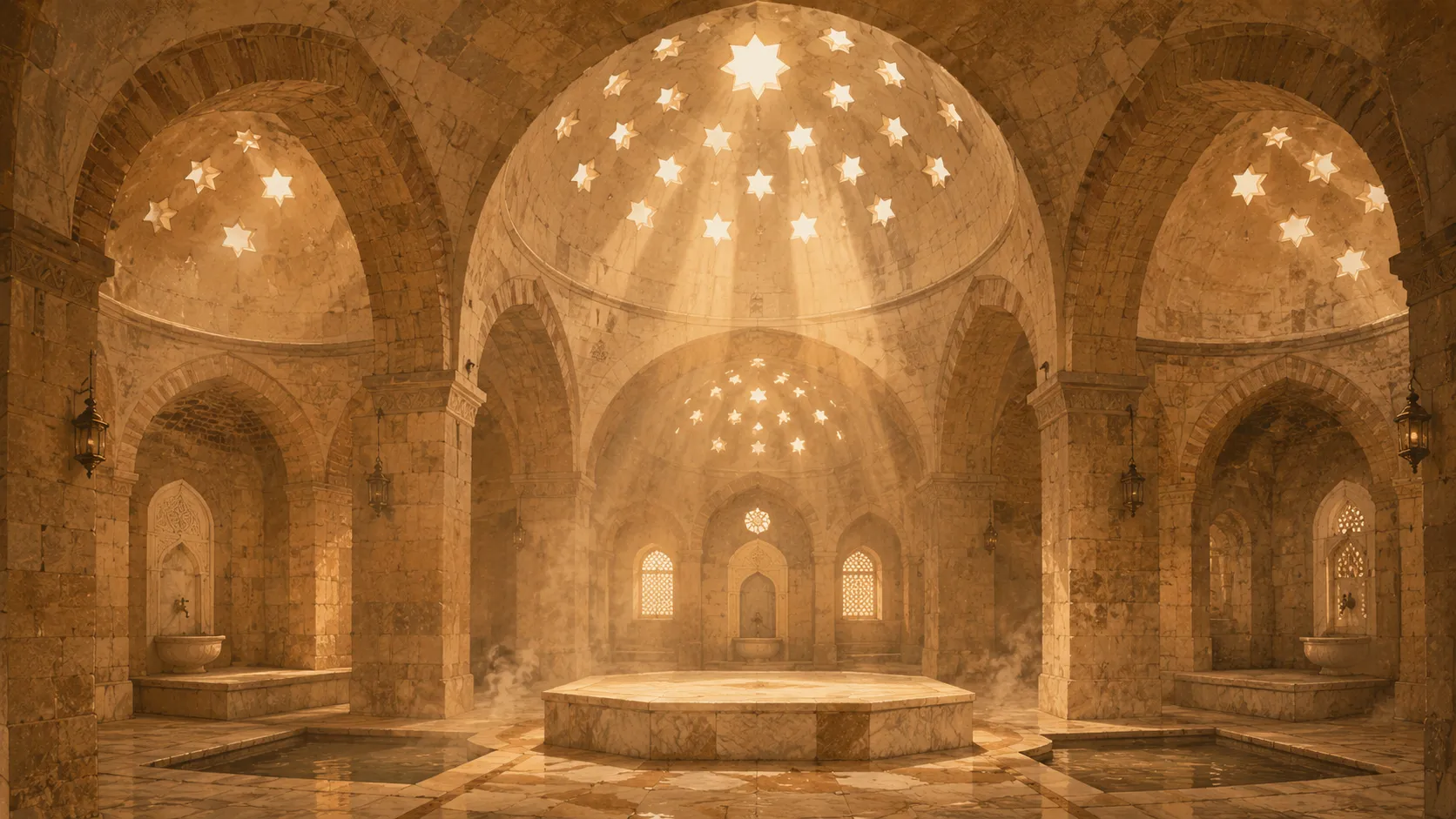
The Old Hammam
The vanished Ottoman bathhouse of the bazaar quarter — part of the endowment that made the old town whole, praised by a traveller in 1662, and the one piece of the Hadum complex that never came back.
This is the one place in the guide you cannot visit. The hammam — the Ottoman public bath of the bazaar quarter — no longer stands, and even the date of its vanishing is disputed. Its absence is still worth a few minutes, because for some three centuries it was part of what made Gjakova a complete town rather than a row of shops.
A bath in the endowment
The bath belonged to the same charitable foundation as the mosque. When Süleyman Hadum Aga endowed his vakëf in 1594–95, he provided not only a mosque, a school and a library but a hammam and an inn — the full apparatus of an Ottoman town. The point of such a cluster was self-sufficiency: within a few hundred paces a person could pray, study, trade, lodge and bathe. The hammam was where the bazaar washed off its working week.
”A delightful bathhouse”
We know it was admired, because a famous visitor said so. Evliya Çelebi, describing Yakova in 1662, set it among the town’s pleasures:
… two richly adorned congregational mosques, several prayer-houses, some khans with leaden roofs, a delightful bathhouse, and about 300 shops like nightingale-nests.
— Evliya Çelebi, Seyahatnâme, 1662
That single word — delightful — is very nearly all the description of the building we have.
A disputed disappearance
When the hammam was lost is genuinely unclear. One strand of the record says it was destroyed during the Second World War; another dates its final demolition to 2008. Both could be true of one building — damaged in mid-century, cleared decades later — but the sources do not agree, and no firm founding date or floor plan survives for it either. Be wary, too, of travel write-ups that promise a restored bathhouse to tour: those belong to other cities. Gjakova’s is gone.
Reading the absence
It stood somewhere in the cluster around the mosque, and that is as precise as honesty allows. There is a particular poignancy in a building that is attested but unseen: the çarshia burned and was rebuilt, the mosque was shot and restored, the library was gutted and its shell raised again — but the bath simply slipped out of the city, taking its dates with it. Sometimes the most telling thing a place can show you is the shape of what is missing.
Related places
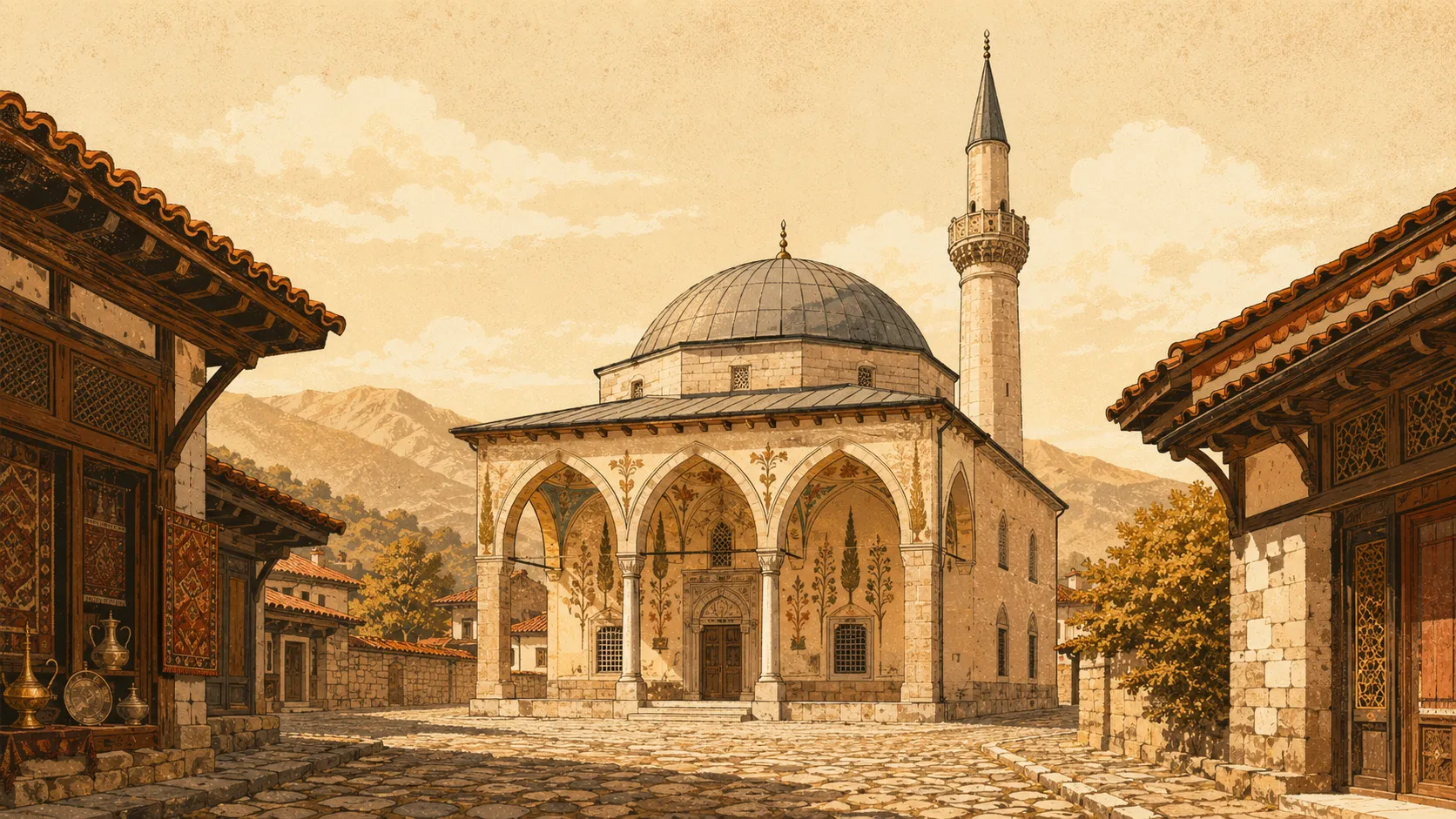
The Hadum Mosque
c. 1594
The late-Ottoman mosque at the head of the bazaar — its interior a painted garden of cypresses and flowers, and the endowment from which the whole old city grew.
Read the guide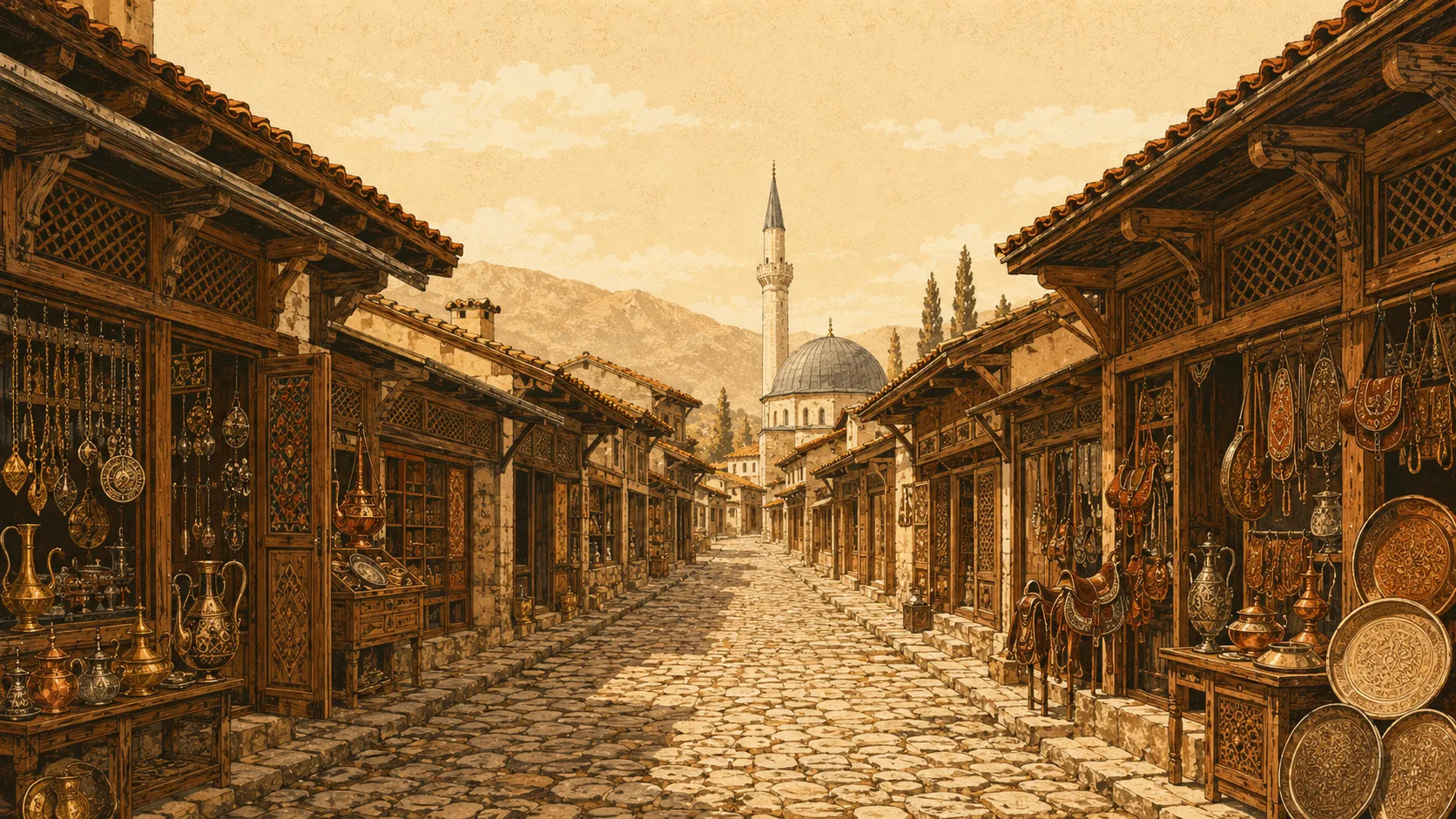
The Grand Bazaar
16th century
The beating heart of old Gjakova — a kilometre of cobbled lanes lined with craftsmen's shops, the oldest and longest bazaar in Kosovo, burned in 1999 and rebuilt shop by shop.
Read the guide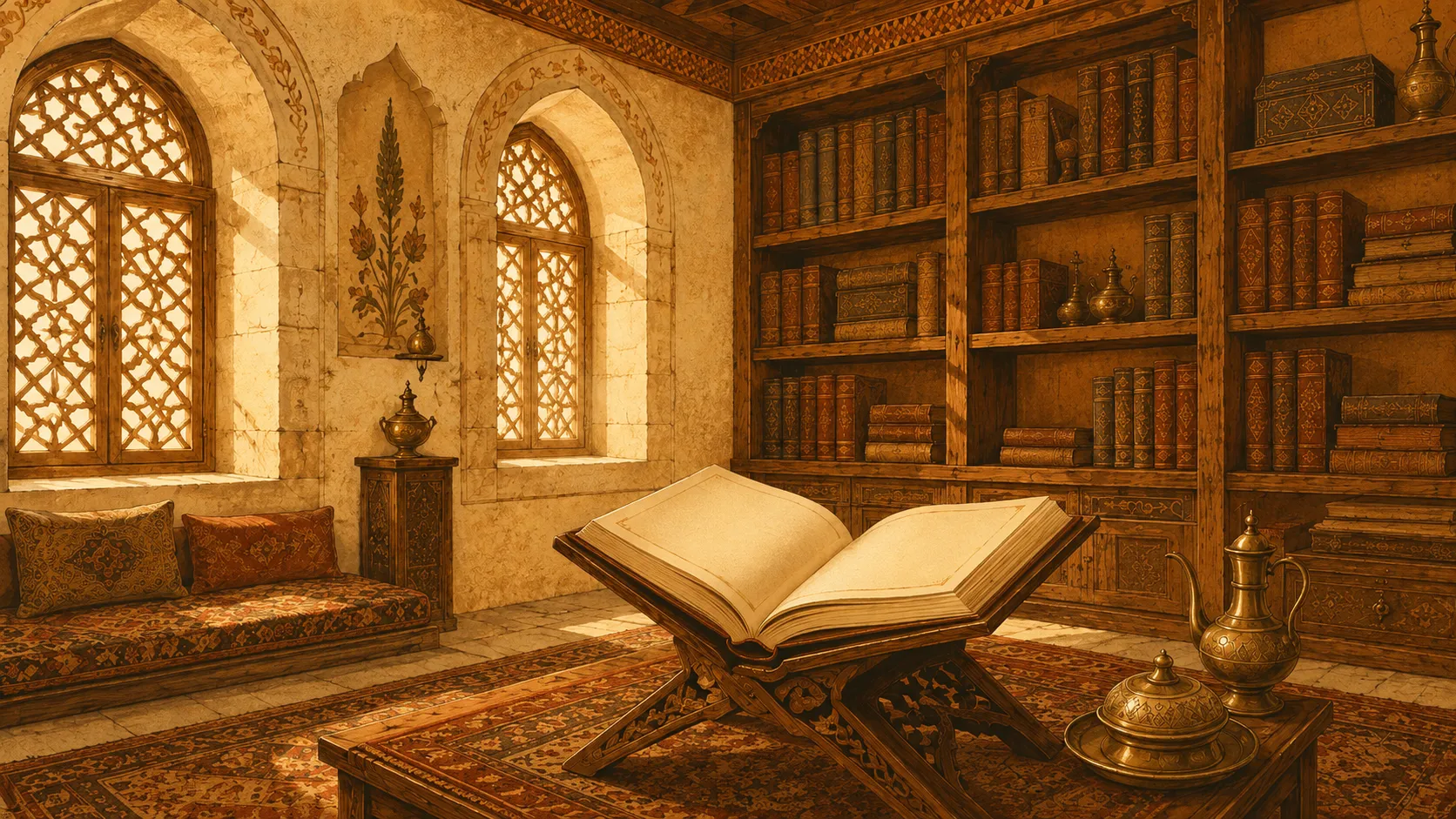
The Hadum Library & Madrasa
founded 1595
The college and famed library beside the Hadum Mosque — for centuries the old city's house of learning, until its manuscripts burned in 1999. The building has risen again; the books are gone for good.
Read the guide