The Tailors' Bridge
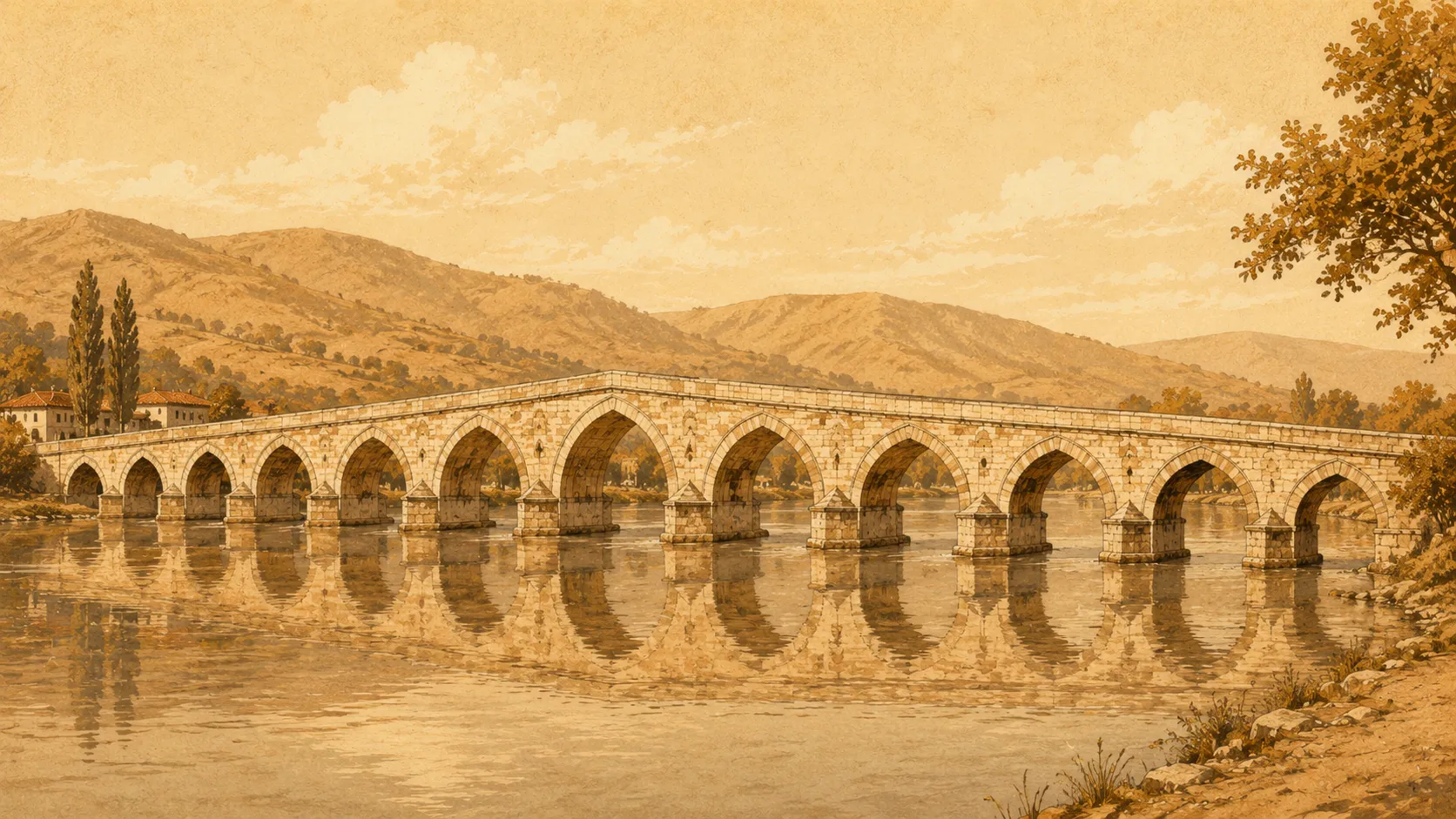
A long Ottoman stone bridge over the Erenik — eleven arches on the old Gjakova–Prizren road, financed by the city's tailors' guild and carved with their name.
Some monuments were built by sultans and pashas. This one was built by tailors. The Tailors’ Bridge — Ura e Terzive — carries an old road over the Erenik river east of Gjakova: eleven stone arches laid down not by a ruler but by a guild of craftsmen who pooled their earnings to span a river.
Eleven arches over the Erenik
The bridge crosses the Erenik near the village of Bishtazhin, about ten kilometres from the city on the historic road to Prizren. It is a substantial piece of engineering — eleven semicircular arches of varying span, with smaller relief openings between them to let high water through, running almost 193 metres end to end and some five metres wide. It is built of local trimmed stone in two tones, dark grey and ochre, so that in good light the whole crossing seems faintly banded.
A guild’s bridge
Its name is not decorative. A Turkish inscription on the bridge records that Gjakova’s tailors’ guild — the esnaf of the terzinj — paid for the work: an act of collective philanthropy carved into stone. It says something about the old bazaar that the same guilds which ran the city’s trade also built its public works, and a bridge on the Prizren road served the tailors directly, carrying their cloth and custom between the two towns. (It should not be confused with Gjakova’s smaller tanners’ bridge — a separate crossing.)
How old is it?
How old the bridge is, no one can say for certain — and the honest answer is more interesting than a tidy date. A crossing almost certainly stood here by the late fifteenth century, when the medieval Gjakova–Prizren road needed one; the structure you see was largely rebuilt in the eighteenth century, the guild inscription most likely belonging to that phase. Arches were added and altered over time as the Erenik shifted its course across the plain. In that sense the bridge is a record of a restless river — its length and its eleven arches partly the marks of water that would not stay put.
A quiet monument
The Erenik long ago wandered, and a modern road now carries the Gjakova–Prizren traffic a few metres to the north, leaving the old bridge to itself. Restored in 1982–84 and protected as a monument of exceptional importance, it is today a place to walk rather than drive: a long, low, two-toned arc over the water, best caught with the light raking along its arches. It rewards the short detour from the main road.
Gallery
Image credits
- The Tailors' Bridge over the Erenik.Wikimedia CommonsCC BY-SA 4.0
- The bridge with the Accursed Mountains beyond.Wikimedia CommonsCC0
Related places
The Grand Bazaar
16th century
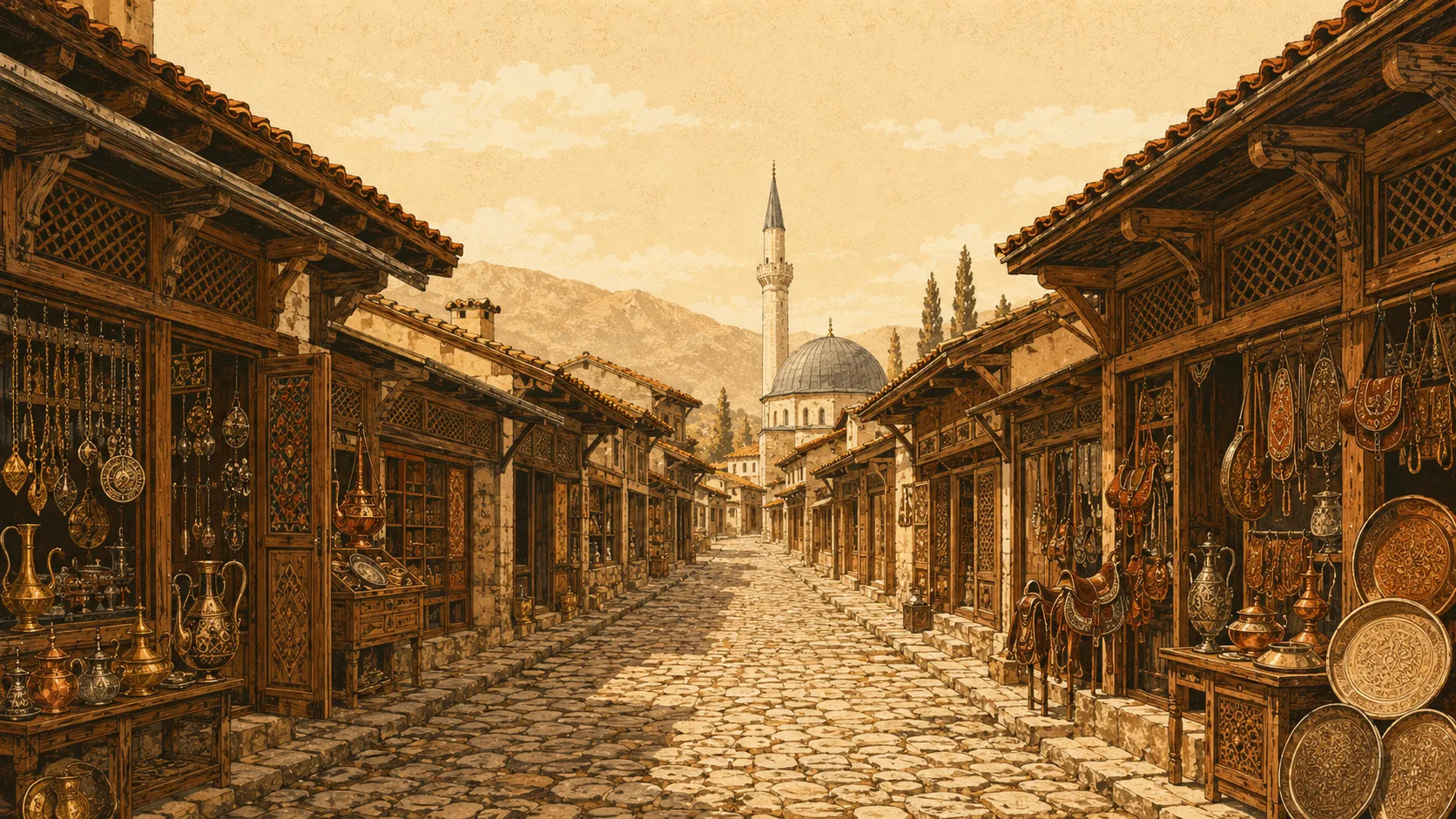
The beating heart of old Gjakova — a kilometre of cobbled lanes lined with craftsmen's shops, the oldest and longest bazaar in Kosovo, burned in 1999 and rebuilt shop by shop.
Read the guide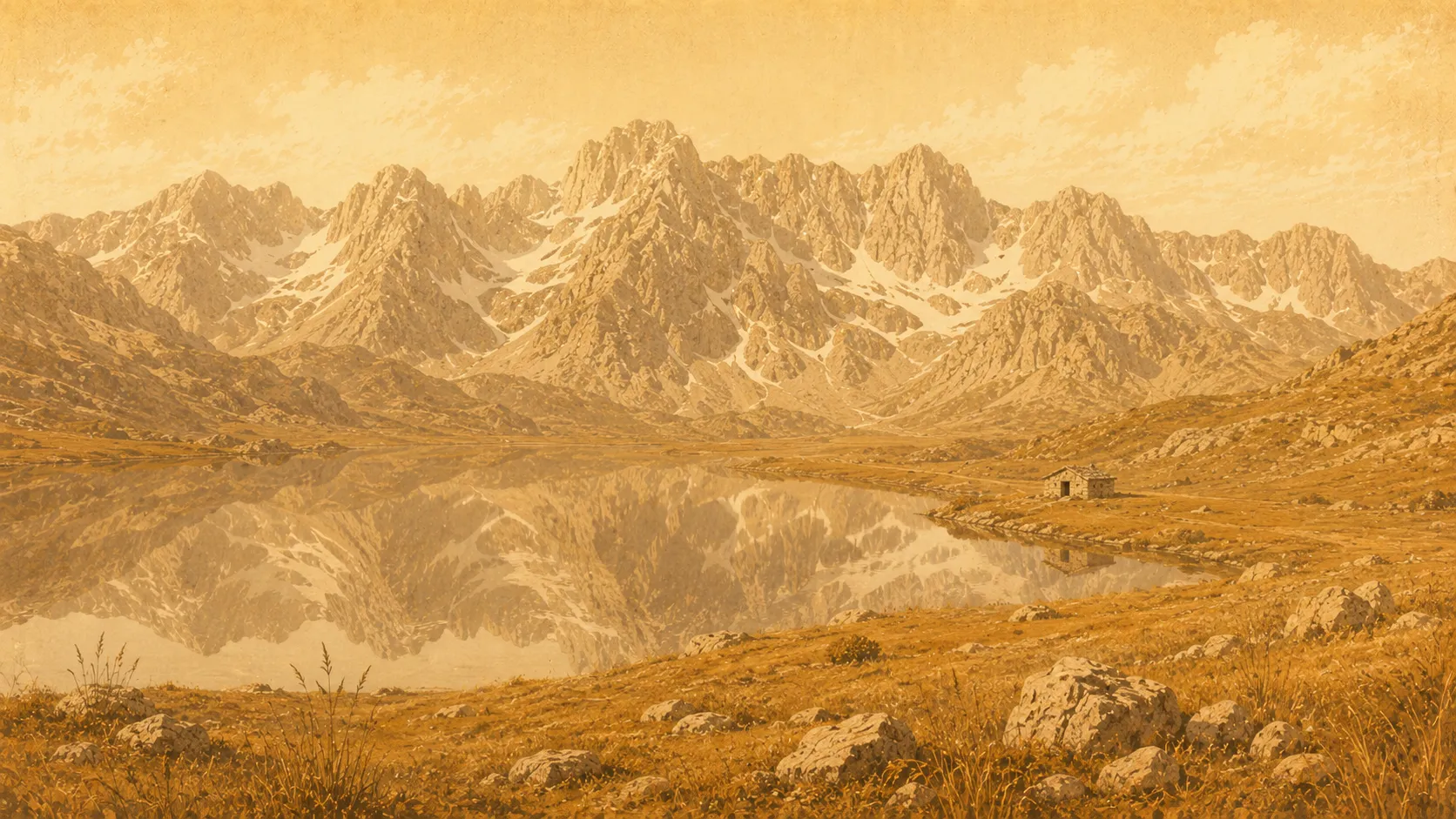
The Accursed Mountains
The alpine wall west of Gjakova — the Bjeshkët e Nemuna rising beyond the Erenik valley, with glacial lakes, high summer pastures, and Kosovo's highest peak within a day's reach.
Read the guide