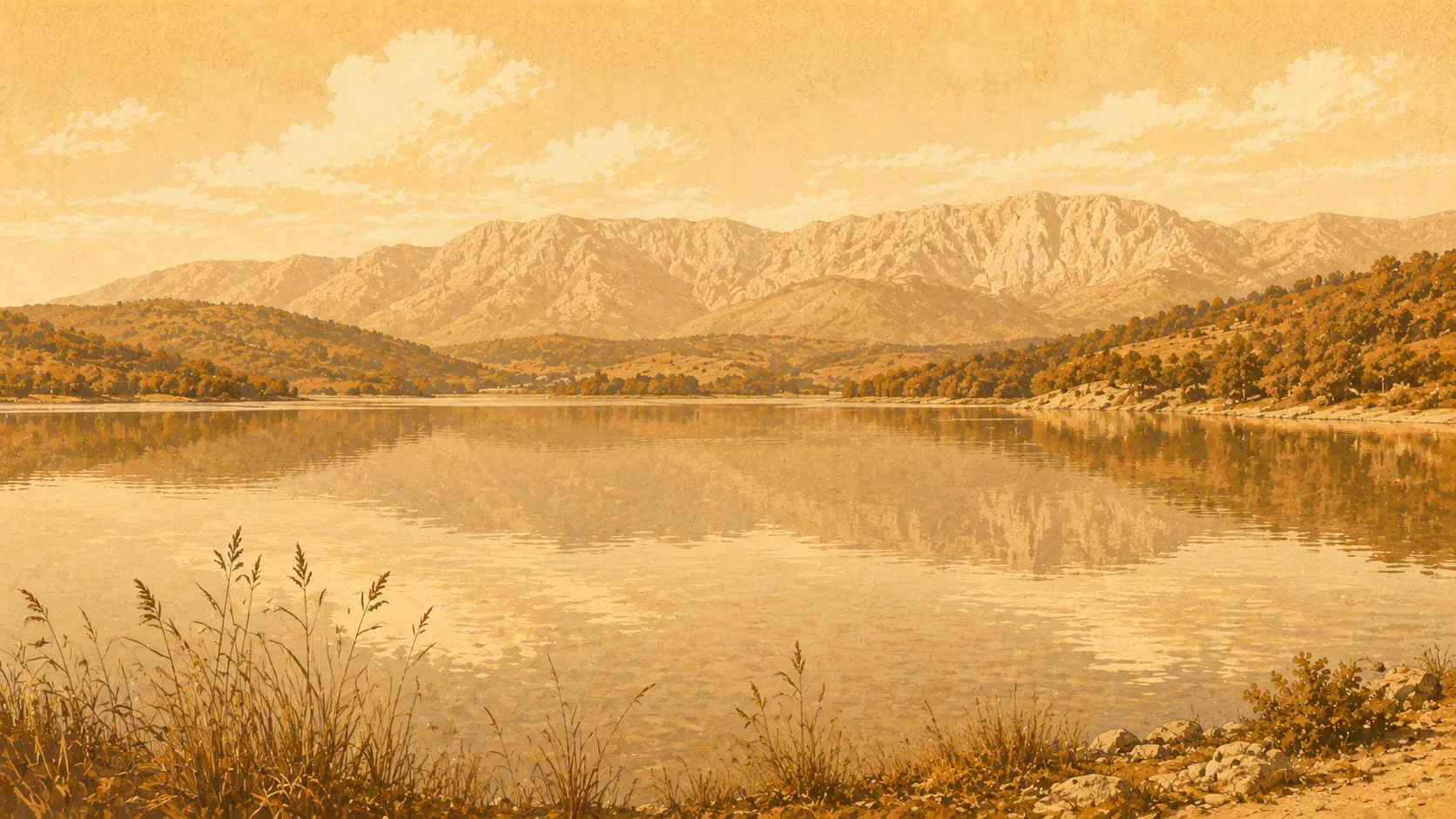
Radoniq Lake
Kosovo's second-largest body of water — a vast reservoir below the mountains that waters the Dukagjin plain and supplies the city, its quiet, undeveloped shore the nearest open scenery to Gjakova.
Not every lake is made by nature. Radoniq Lake — Liqeni i Radoniqit — is the broad sheet of water that lies below the mountains south-west of Gjakova, and it is entirely the work of human hands: an artificial reservoir, raised in the 1980s, that serves at once as the region’s water supply and its nearest piece of open country.
A lake that was built
Radoniq was built between 1977 and 1986 and began to fill in 1983, the centrepiece of a scheme to irrigate the dry Dukagjin plain and pipe drinking water to Gjakova, Rahovec and the villages around them. Today it serves more than two hundred thousand people and waters some ten thousand hectares of farmland. Making it came at a cost in memory: the valley now underwater took its name from the village of Radoniq, which was cleared and drowned as the dam closed and the water rose.
Kosovo’s second sea
For all that it was made, it is genuinely large — the second-biggest body of water in Kosovo, after the Gazivoda (Ujmani) reservoir on the northern border. It covers around six square kilometres, runs close to five kilometres long, and drops to roughly thirty metres deep, held at some 455 metres above sea level. One common belief is worth correcting: despite Gjakova’s close bond with the Erenik, the lake is not fed by that river but by the Lumbardhi i Deçanit, the mountain water descending from Deçan.
A working lake
It helps to remember what the lake is for. Because Radoniq is a drinking-water reservoir, swimming in it is not permitted — this is infrastructure as much as scenery. Fishing, on the other hand, is popular along the banks, the water having been stocked over the years, and the shore is otherwise left largely undeveloped: no promenade, no cafés, just road, reeds and water. That plainness is much of the appeal.
Going out there
The lake lies about eleven kilometres from Gjakova on the road toward Deçan, an easy excursion by car. There is little to do in the organised sense, which is rather the point: people come to walk a stretch of bank, to fish, and to watch the light shift over a very large, very quiet expanse of water with the Accursed Mountains standing behind it. Late afternoon, when the far shore turns to gold, is the hour to be there.
Gallery
Image credits
- Radoniq Lake.Wikimedia CommonsCC BY 2.0
- The reservoir from the air.Wikimedia CommonsCC BY-SA 4.0
Related places
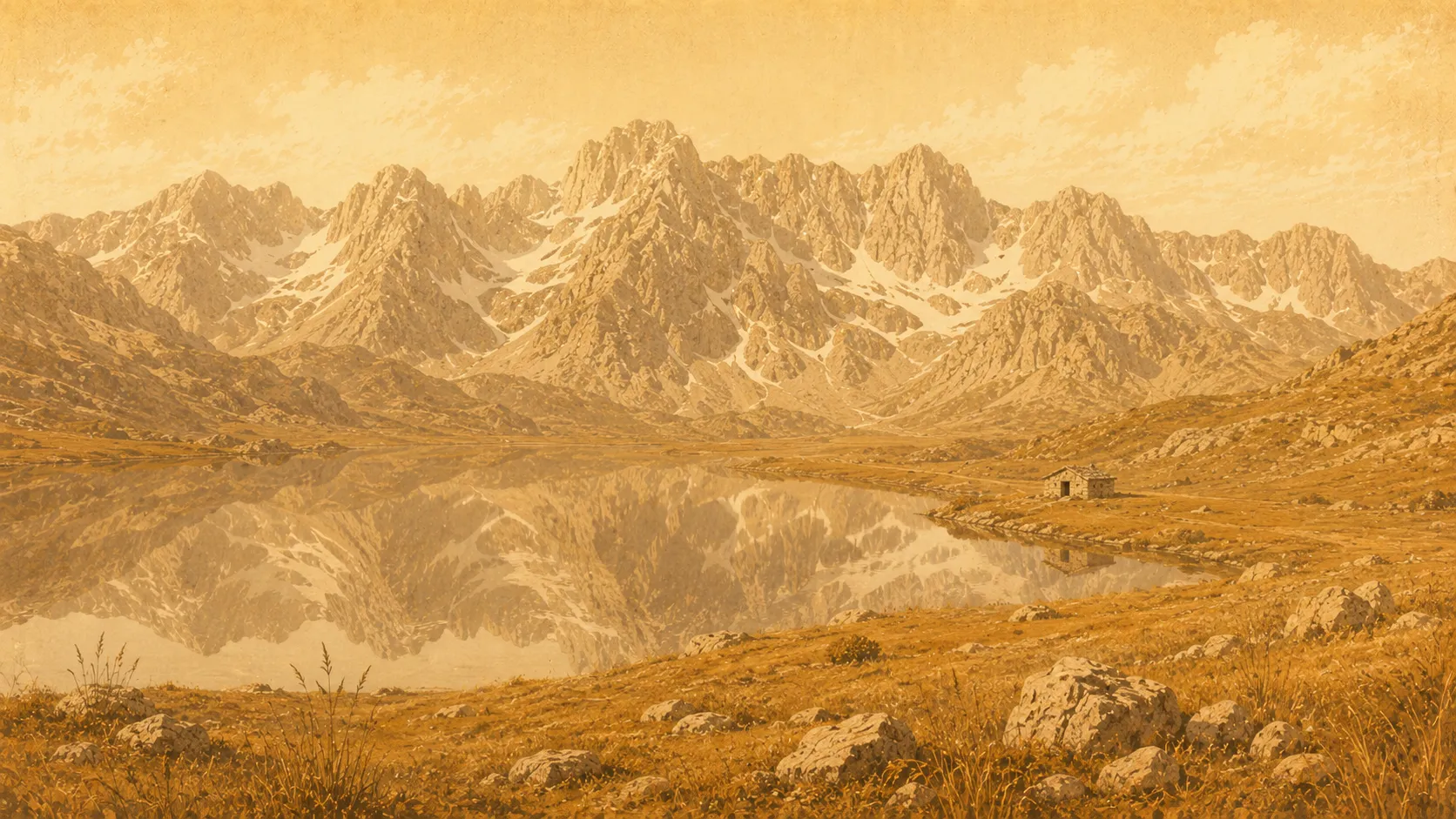
The Accursed Mountains
The alpine wall west of Gjakova — the Bjeshkët e Nemuna rising beyond the Erenik valley, with glacial lakes, high summer pastures, and Kosovo's highest peak within a day's reach.
Read the guide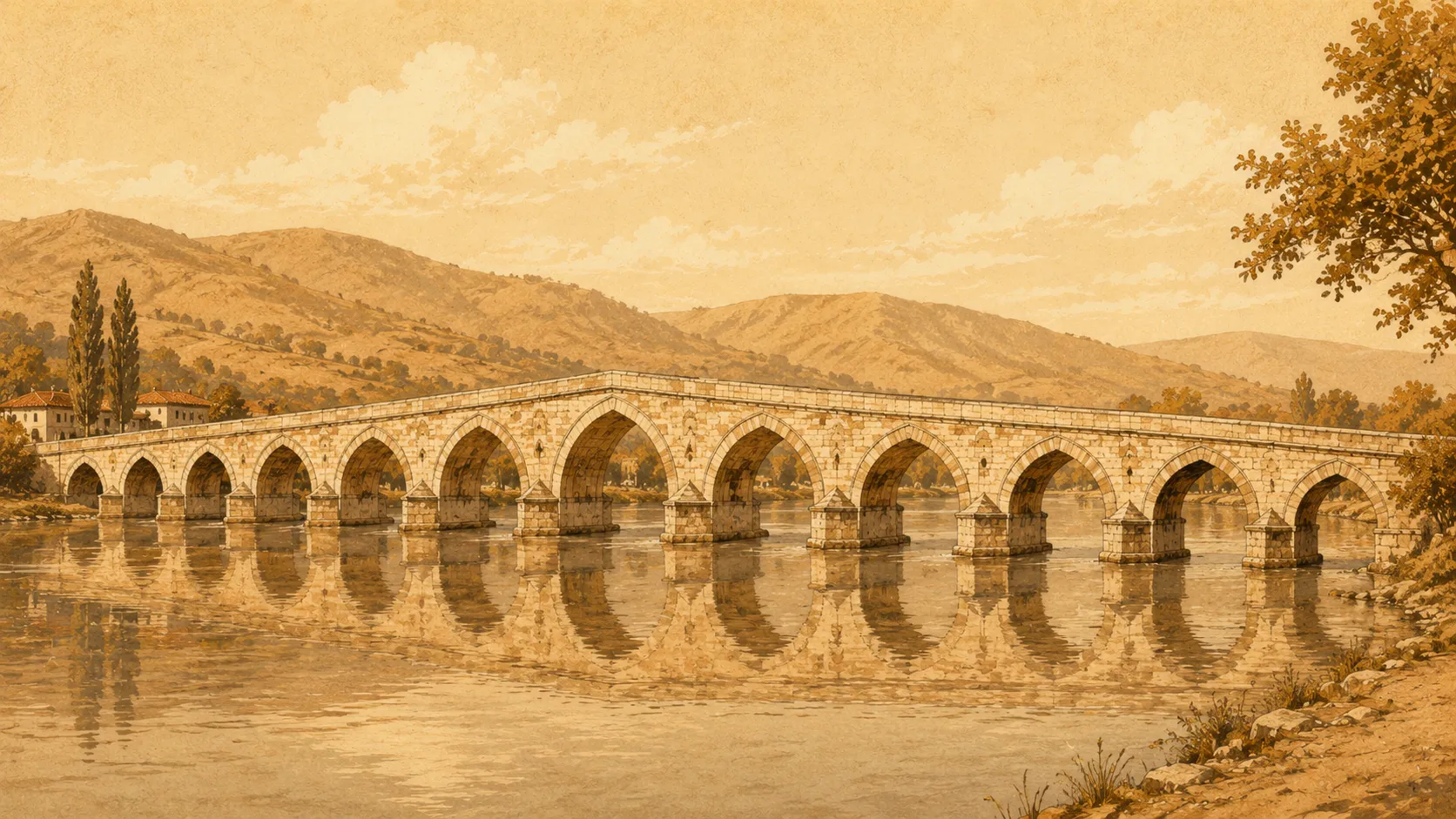
The Tailors' Bridge
15th–18th century
A long Ottoman stone bridge over the Erenik — eleven arches on the old Gjakova–Prizren road, financed by the city's tailors' guild and carved with their name.
Read the guide